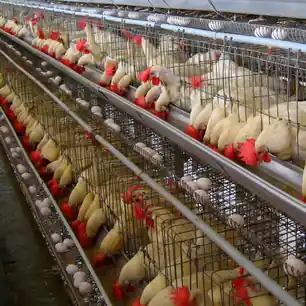
Join Us at Hall 3, HITEX – Where Innovation Meets Reliability in Poultry Farming
Poultry India 2025 is around the corner, and CHAKRA Poultry Equipment is proud to participate in the 17th edition of one of Asia’s most influential poultry exhibitions. For decades, we have been committed to empowering farmers with durable, efficient, and world-class equipment designed to improve productivity, ensure bird comfort, and increase profitability. This year, we look forward to showcasing a refreshed range of innovations built to meet global standards.
What You Can Explore at Our Stall – Hall 3, HITEX
At the CHAKRA pavilion, visitors will get a close look at our complete ecosystem of poultry solutions, engineered for both new and growing farms:
-
Premium Poultry Cages Built to International Standards
Our cages are designed with farmer convenience and bird welfare in mind. Strong structure, superior ventilation, anti-corrosion materials, and ergonomic design make them ideal for long-term performance under varied farm conditions.
-
High-Performance Modular Battery Cages
Built for expansion and efficiency, these cages offer durable construction, easy assembly, and uniformity that ensures smooth farm operations. They are engineered to reduce mortality, improve hygiene, and enhance overall farm output.
-
Precision-Engineered Nipple Drinkers
Watering plays a critical role in poultry health. Our nipple drinkers deliver consistent water flow, minimizing wastage and ensuring every bird receives clean hydration at all times.
-
Advanced Feeding Systems
Explore automated and semi-automated feeding systems designed to ensure uniform feed distribution while reducing manual labor and operational costs.
-
Smooth and Reliable Egg Collection Solutions
Our egg collection systems are made to prevent breakage, improve speed, and maintain egg quality — essential for commercial layer operations of all sizes.
-
Fencing Solutions and Farm Infrastructure
From poultry-grade fencing to durable farm accessories, CHAKRA brings reliable and easy-to-install solutions for safer and better-managed farms.
-
Egg & Bird Handling Equipment
Designed for hygiene, efficiency, and reduced stress on birds — these tools help streamline daily farm activities.
Why Visit CHAKRA at Poultry India 2025?
- Get expert guidance from our team on optimising farm layout, choosing the right cage system, and upgrading existing infrastructure.
- Experience equipment built with decades of engineering experience and customer feedback from India, Africa, and global markets.
- Learn how CHAKRA’s solutions improve productivity for both small and large-scale poultry enterprises.
- Discuss end-to-end farm setup support — from planning to installation to after-sales service.
For years, CHAKRA Poultry Equipment has been recognized as “The Farmer’s Most Trusted Poultry Brand.” Our commitment to quality, durability, and customer success continues to drive us as we support the next generation of poultry entrepreneurs.
See You at HITEX!
We invite poultry farmers, integrators, distributors, consultants, and industry professionals to visit us at Hall 3 at HITEX during Poultry India 2025. Come experience proven solutions that deliver real results.
CHAKRA Poultry Equipment — Engineering Excellence for Modern Poultry Farming.
The recent tariff decisions by the United States have triggered discussions across global markets, and India’s poultry industry is no exception. While India does not export much poultry to the US, these tariff moves still create ripple effects that farmers, integrators, processors and allied sectors should pay attention to.
Direct Impact Is Limited, But the Indirect Impact Is Where the Real Story Lies
India’s poultry exports to the US have always been minimal. The Indian poultry market is largely domestic-driven, with consumption growing every year.
So, on the surface, the latest US tariffs do not directly hurt India’s poultry sector.
However, the concern is not about what we export — it’s about what we might import in the future.
The US has been consistently asking for wider market access in India. With tariffs becoming a negotiation tool, India may face pressure to ease barriers for US poultry products such as frozen chicken legs, turkey, and other cuts.
This is where indirect impact begins to take shape.
Why India Remains Cautious About Poultry Imports
India’s poultry ecosystem is built on a large base of small farmers, contract growers and rural entrepreneurs. Opening doors to low-cost, subsidised US poultry could:
- disrupt local pricing
- affect farmer profitability
- push small producers out of the market
- increase dependence on imported poultry
- introduce biosecurity risks linked to disease outbreaks abroad
India has always been firm about protecting domestic animal health, food safety standards and livelihoods. Unlike the US, Indian poultry farmers do not get large subsidies — which makes a fair competition extremely difficult.
What Happens If India Opens Its Market to US Poultry?
If India reduces poultry import tariffs under trade pressure, a few outcomes are likely:
Price Pressure on Domestic Producers
US producers operate at a much lower cost due to large-scale integrated systems and subsidies. Imported frozen chicken could enter Indian markets at highly competitive prices, putting local farmers at a disadvantage.
Impact on Small & Medium Farmers
Most Indian farmers operate small or mid-sized poultry units. Sudden competition with cheap imports could affect their survival and reduce capacity expansion.
Volatility in Local Market Prices
Increased imports may cause short-term drop in prices, followed by long-term price instability — something the Indian poultry industry has faced in the past.
Biosecurity & Disease Concerns
India has been strict about avoiding exposure to avian influenza and other global poultry diseases. Relaxing import rules may require stronger monitoring systems, which raises cost and risk.
Recent Policy Signals — What Should the Industry Watch?
India recently agreed to lower tariffs on select US poultry items like turkey and duck as part of a wider trade settlement. While this does not affect mainstream chicken and egg markets, it signals that poultry could appear in future trade talks.
Key areas to monitor include:
- tariff changes on frozen chicken cuts
- sanitary & phytosanitary (SPS) conditions
- import approvals for large global poultry exporters
- domestic incentive schemes for Indian poultry farmers
- disease monitoring and food safety regulations
What This Means for Poultry Farmers, Integrators and Investors
For now, the Indian poultry sector remains stable and largely unaffected. But global trade is moving fast, and US tariff strategies could push India toward more negotiation-based decisions.
Farmers and industry players should:
- stay updated on trade policies
- strengthen productivity and efficiency
- focus on high-quality feed, breeding and farm automation
- build disease-resistant, biosecure operations
- work closely with industry associations for representation
The US tariff situation serves as a reminder that India’s poultry industry must stay alert and future-ready. While India is not facing immediate disruption, the long-term effects of global trade negotiations can influence domestic markets.
The sector’s strength lies in its farmers, integrators, equipment manufacturers, feed producers and allied service providers. With the right balance of protection and progress, India can continue to grow as one of the world’s most resilient poultry markets.